

How does a cochlear implant work?

A cochlear implant goes around damaged hair cells in the inner ear and sends signals to the hearing nerve directly. Those tiny hair cells, thousands of them, normally turn sound into signals for the hearing nerve. When they are damaged, a hearing aid can make sound louder, but not clearer.
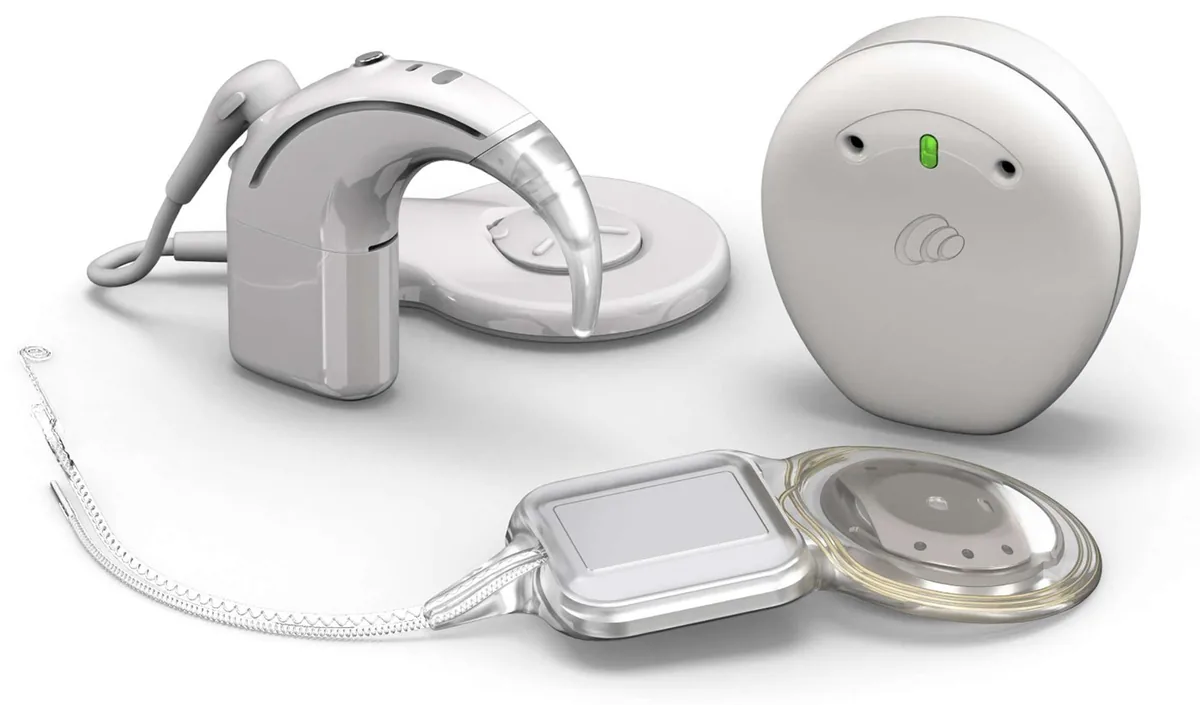
- The sound processor on the ear picks up sound.
- It sends the sound through the skin to the implant.
- The implant sends tiny electrical signals along a thin wire in the inner ear.
- The hearing nerve carries the signals to the brain.
A few weeks after surgery, an audiologist switches the processor on and tunes it to the person. This is called mapping. With mapping and practice, most children learn to listen and talk, and most adults can follow conversation again.
Who can a cochlear implant help?
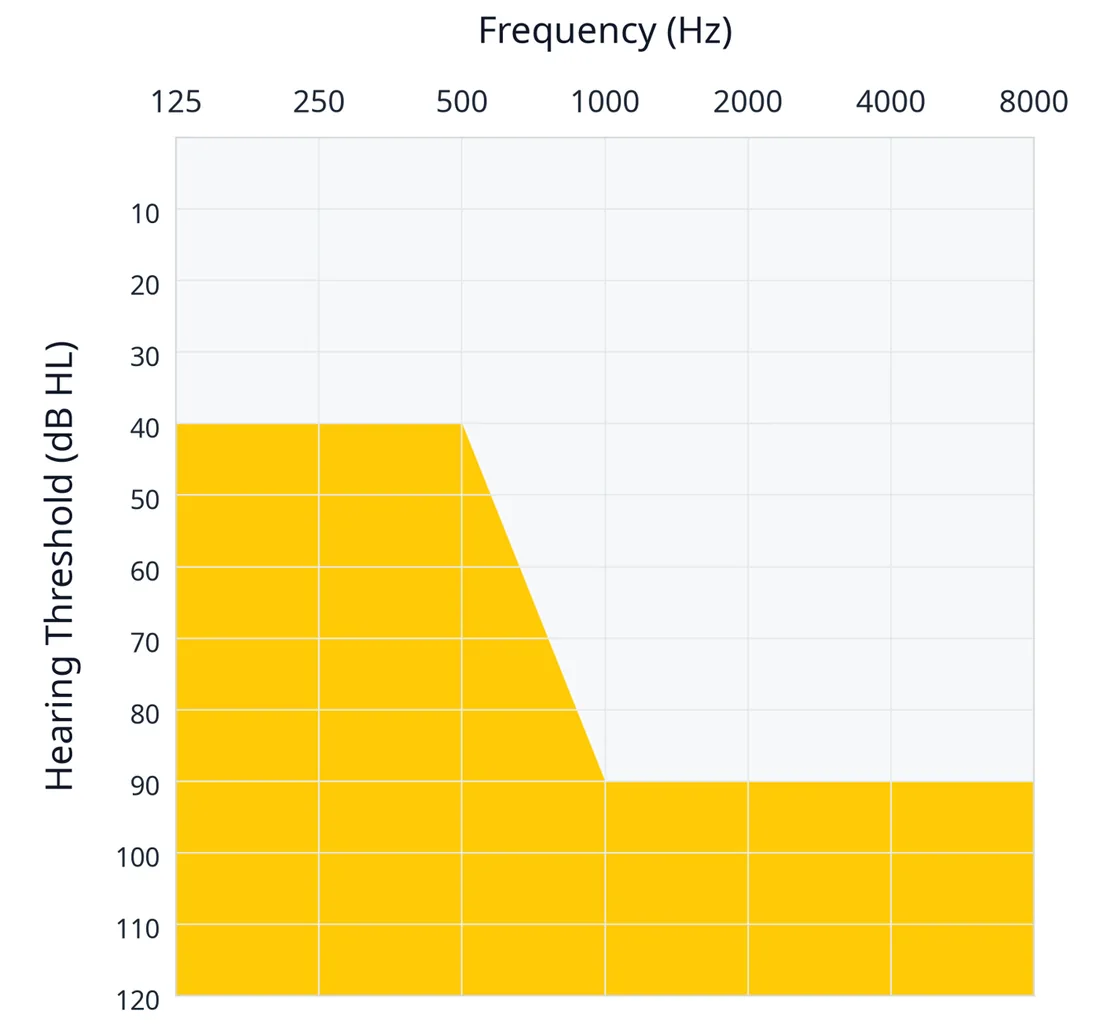
A cochlear implant can help children and adults with severe or profound hearing loss in both ears who cannot hear well enough with hearing aids.
Children
- Children born with severe or profound hearing loss in both ears.
- Children whose hearing aids do not help them enough to learn to talk.
- The earlier the better. Babies and young children learn language fastest.
Adults
- Adults with severe or profound hearing loss who cannot follow conversation, even with good hearing aids.
- Adults who have lost their hearing after learning to speak. They usually do very well.
- There is no upper age limit.
Only a hearing test can tell if an implant is right for you or your child. The test is free at a Cochlear Care Centre.
If another clinic has told you that you or your child has severe or profound hearing loss, bring the hearing test to us and we will explain what the results mean.
If the hearing loss is conductive or mixed, or only in one ear, a bone conduction implant may suit you better than a cochlear implant. Read about the Osia System.
What is the surgery like?
Many parents worry about the operation. Here is what happens.
- Since Sri Lanka's first in 2004, our team has facilitated and supported more than 1,100 of these operations with Sri Lankan surgeons.
- It is done under general anaesthetic. The child or adult is asleep and feels nothing.
- It takes about 1 to 2 hours.
- The surgeon makes a small cut behind the ear.
- The implant is placed under the skin. The thin wire is guided gently into the inner ear.
- We use Cochlear's SmartNav system to check the electrode is in exactly the right place before the operation finishes.
- The cut is closed with a few stitches and a light dressing.
- Most people go home the same day or the next morning.
- Our audiologists will be with you before, during, and after the operation.

What happens after the surgery?
A few weeks after surgery, an audiologist switches the sound processor on and sets it up for you. This is called mapping, and it is adjusted at follow-up visits. Children then need speech therapy to learn to listen and talk. Our speech therapists are trained in auditory-verbal therapy (AVT) and work in English, Sinhala and Tamil at our Colombo and Kandy Care Centres.